

 Start Read
 Recommend
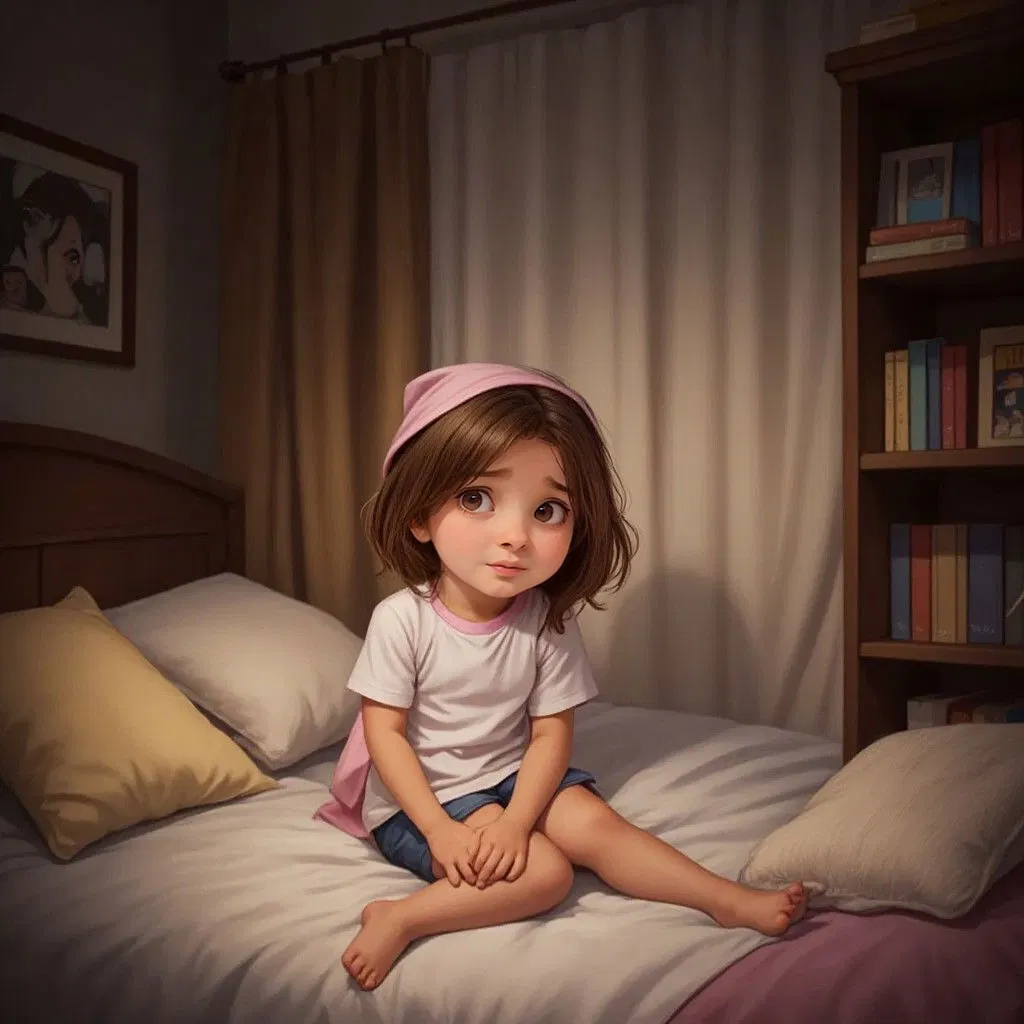
Kız, karanlıkta korkuyor ama yıldızlar sayesinde yolunu bulabiliyor.
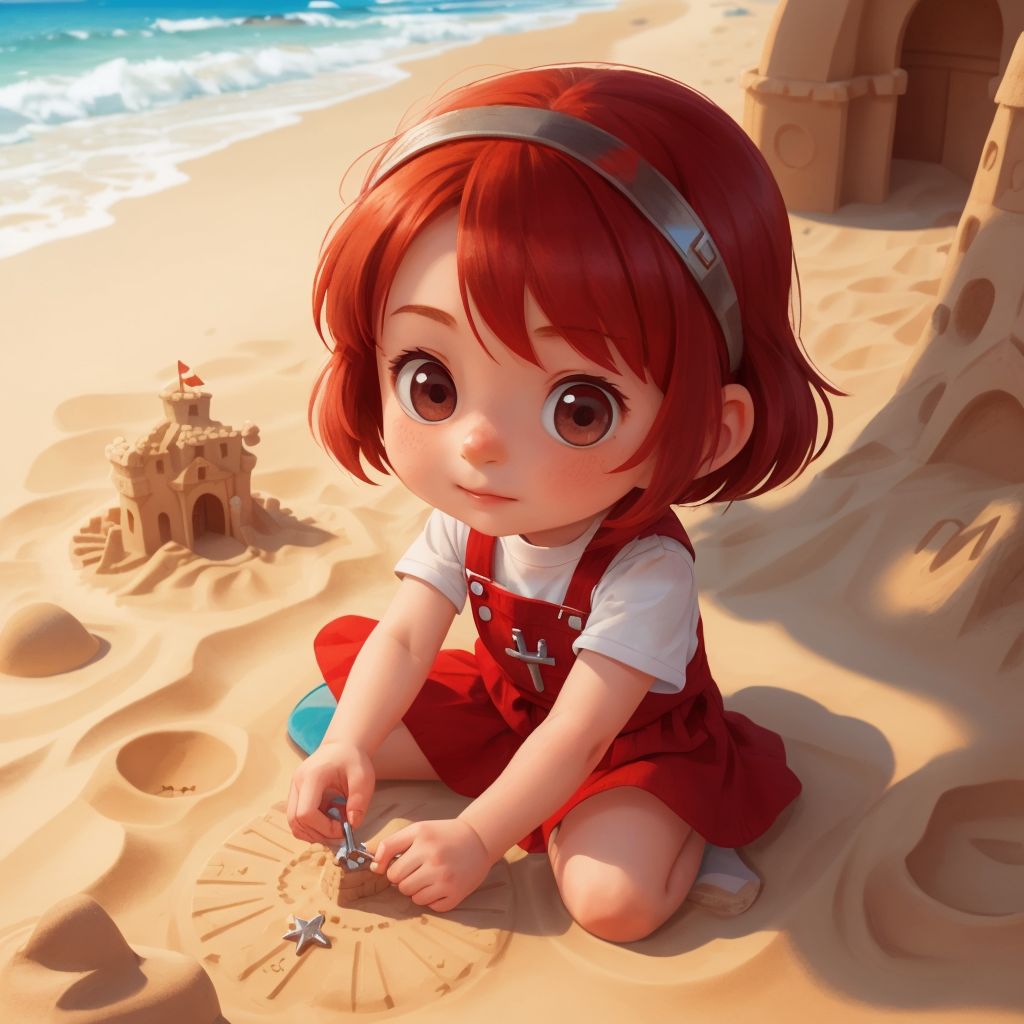
1. A day on the beach 2. Adventure in kitchen 3. Playing at school 4. Adventure in the forest 5. A day on the fram 6. Helping a cat
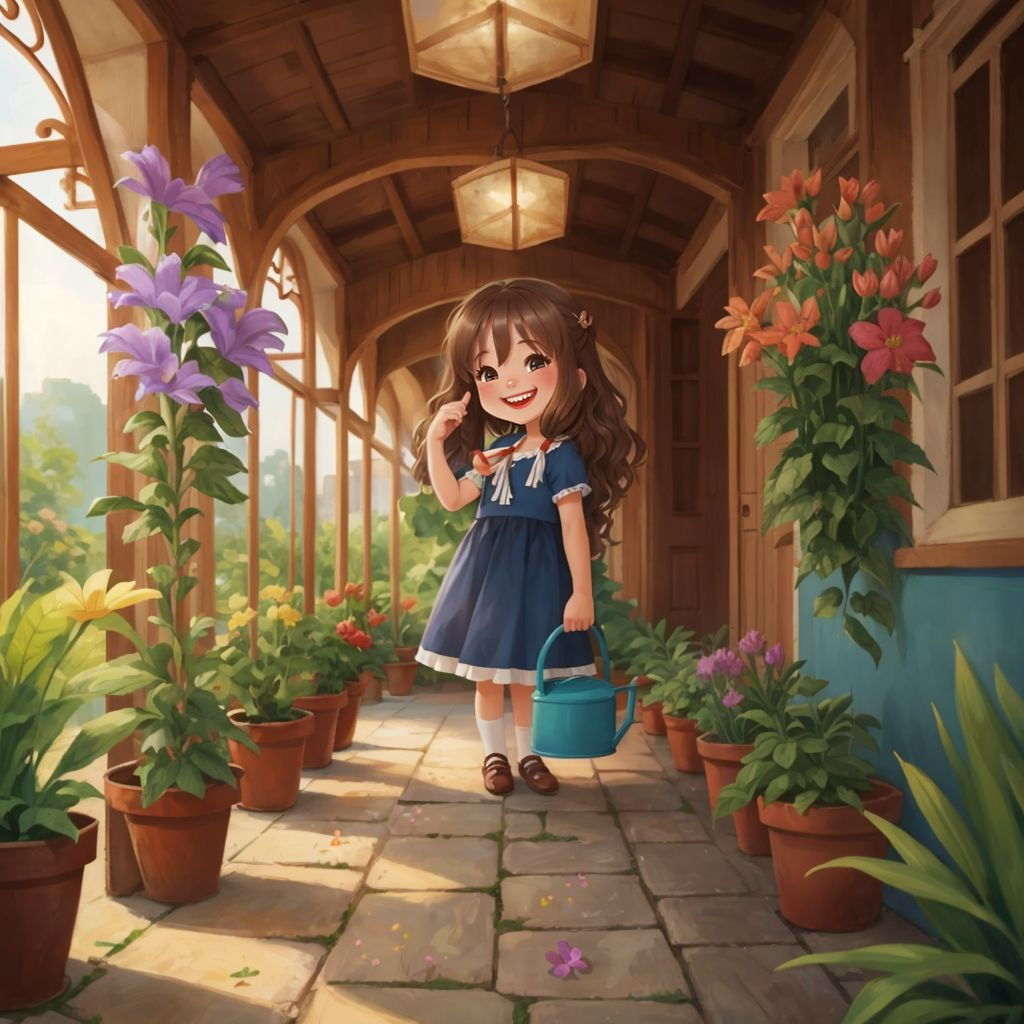
Create an illustration of a vibrant garden scene with tall trees, colorful flowers, and children playing happily. The children should be shown caring for the plants—watering them, smiling, and enjoying the beauty of nature. The scene should be filled with bright colors, with butterflies fluttering and birds in the trees, conveying a sense of joy and the importance of taking care of God’s creation.

Willow is a tiny, bubbly water droplet who embarks on an exciting adventure to explore the important roles she plays in the human body. From keeping food moist to helping remove waste, Willow discovers all the amazing ways water supports health and wellness. Along the way, children will learn why staying hydrated is so important, and Willow's adventure will teach them how water helps every part of the body.
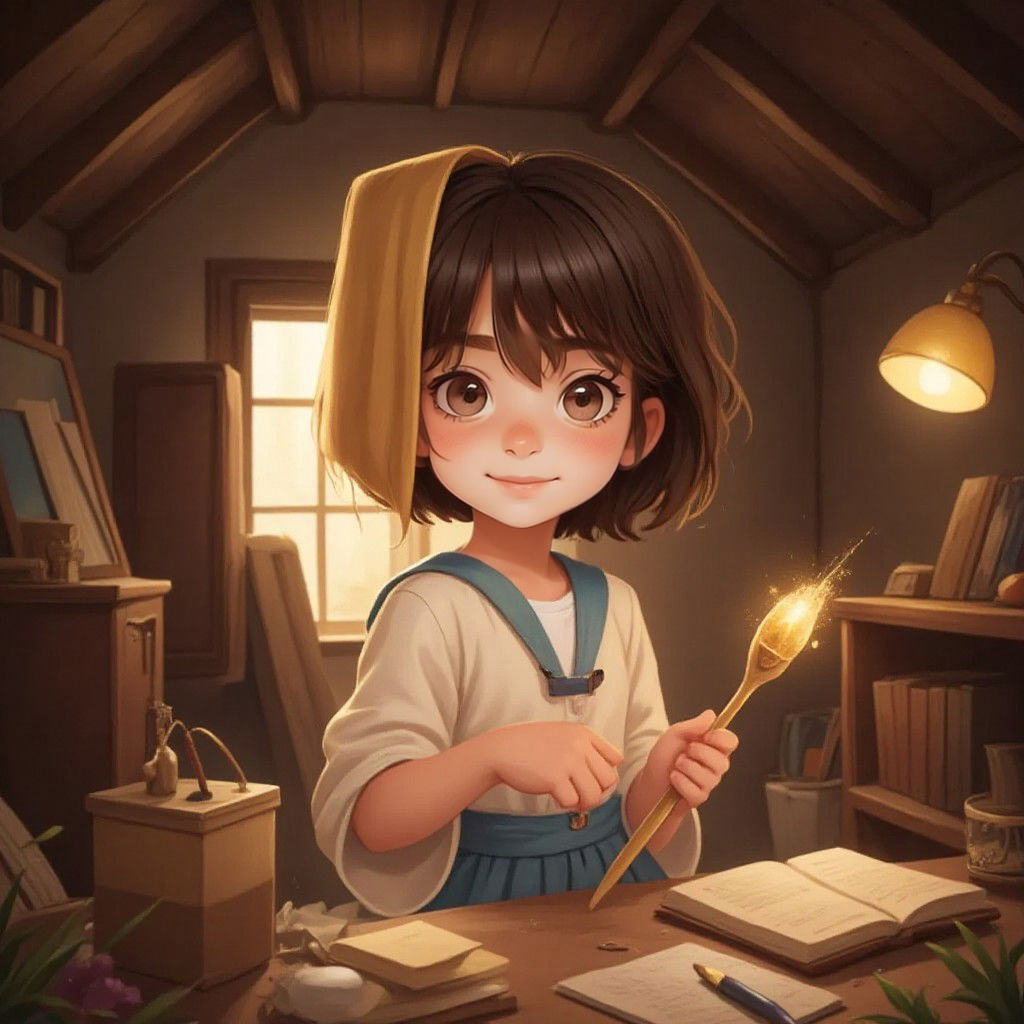
Lora and the Magic Paintbrush Once upon a time, there was a little girl named Lora who loved to paint. She painted everything she could imagine—rainbows, butterflies, and castles. But Lora had one wish: she wanted her paintings to come to life. One sunny afternoon, Lora found an old paintbrush in her grandmother’s attic. The handle sparkled like gold, and when she touched it, a soft voice whispered, “I’m a magic paintbrush. Whatever you paint will come to life!” Lora’s eyes widened in excitement. “Really? Let’s try!” she said. She ran outside to an empty field and painted a big, beautiful tree. As soon as she finished the last stroke, the tree appeared in front of her, tall and full of ripe red apples. “It works!” Lora shouted, jumping with joy. She painted a pond, and sparkling water filled the field. Then she painted a swing under the tree, and it appeared, swaying gently in the breeze. Soon, all the children from the village came to see Lora’s magical creations. She painted flowers, animals, and even a small playhouse for everyone to enjoy. But one day, a little boy said, “Lora, can you paint me a pair of wings? I want to fly!” Lora thought for a moment. “It’s fun to paint magical things, but we should also appreciate what we have.” Instead of painting wings, Lora painted a giant kite. The boy held the kite’s string, and together they ran through the field, laughing as the kite soared high into the sky. From that day on, Lora used her magic paintbrush to bring joy to everyone, while teaching them to cherish the simple, beautiful things around them. The End.
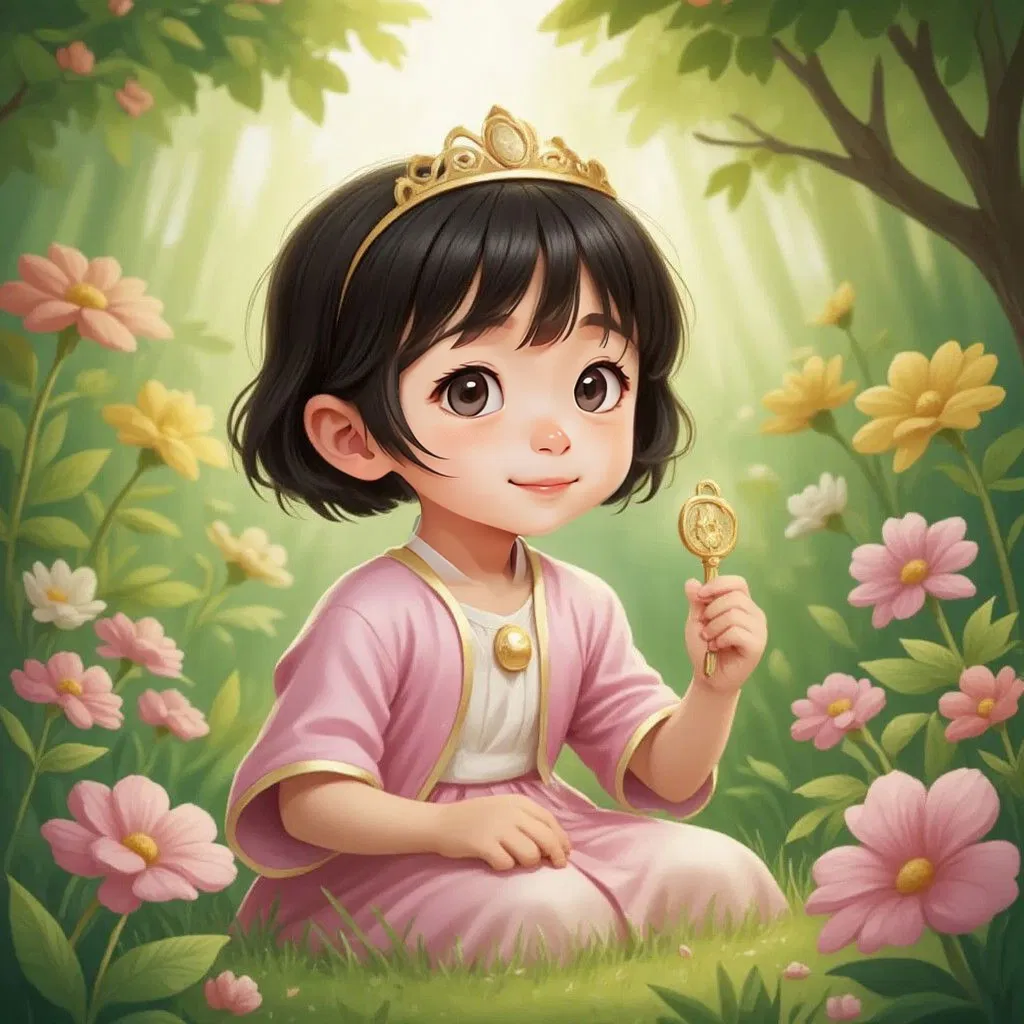
Sugar’s Silly Magical Adventure is a fun and delightful story about a cheerful girl named Sugar who stumbles upon a tiny golden key that unlocks a hidden world made entirely of candy! In this sweet and silly adventure, she meets talking jellybeans, helps the Bubblegum King find his lost crown, and saves the magical candy land from melting away. With simple words and a playful storyline, this story is perfect for young readers who love magic, adventure, and, of course, candy!
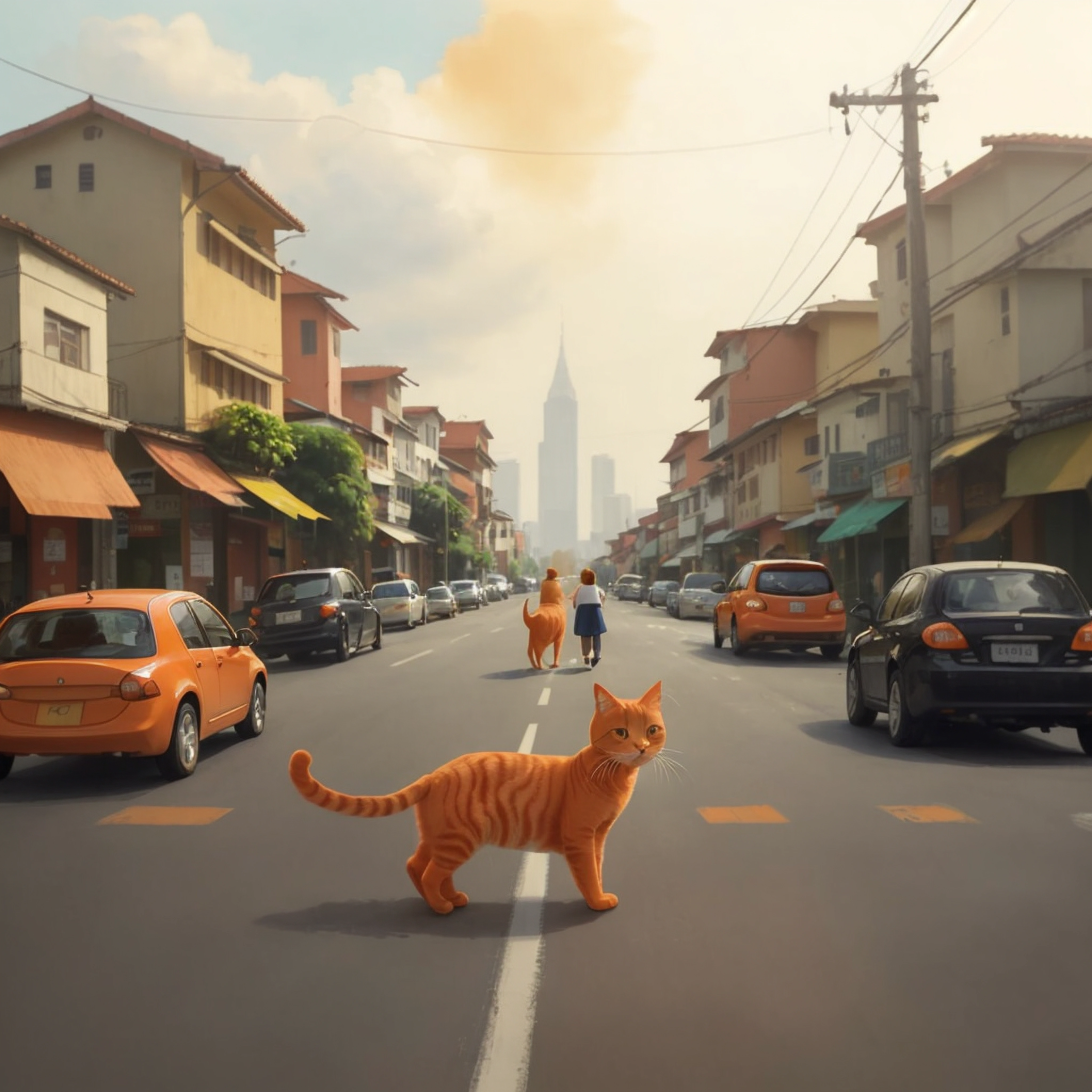
In the street, stray orange cat and stray white dog wander in the busy street of manila with street lights and castle in the end of the road.
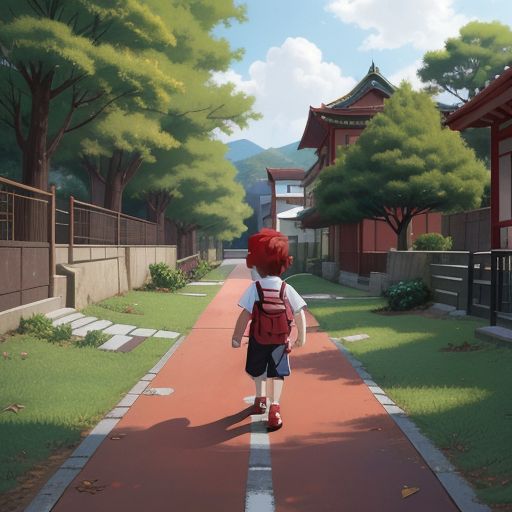
A boy go to school lonely A boy share food at school

Main Characters: I’ll include two curious children, who will learn about Diwali together—perhaps through a magical storyteller or a wise grandparent. 2. Story Style: A fairy-tale format to bring the story of Diwali’s origins to life, featuring the story of Prince Rama, Sita, and the return to Ayodhya, with lots of colorful, magical descriptions. 3. Educational Elements: I’ll explain why Diwali is called the “Festival of Lights,” and incorporate other Diwali customs, such as lighting diyas, cleaning homes, wearing new clothes, and family celebrations. 4. Rhyming: I’ll make it rhythmic to add a musical flow. 5. Illustrations: Let’s include four vibrant illustrations to show: • The beginning, with the children preparing to learn about Diwali • The scene of Prince Rama, Sita, and Hanuman’s adventures • The return to Ayodhya, where the kingdom lights up in celebration • The modern-day Diwali celebrations with family and fireworks
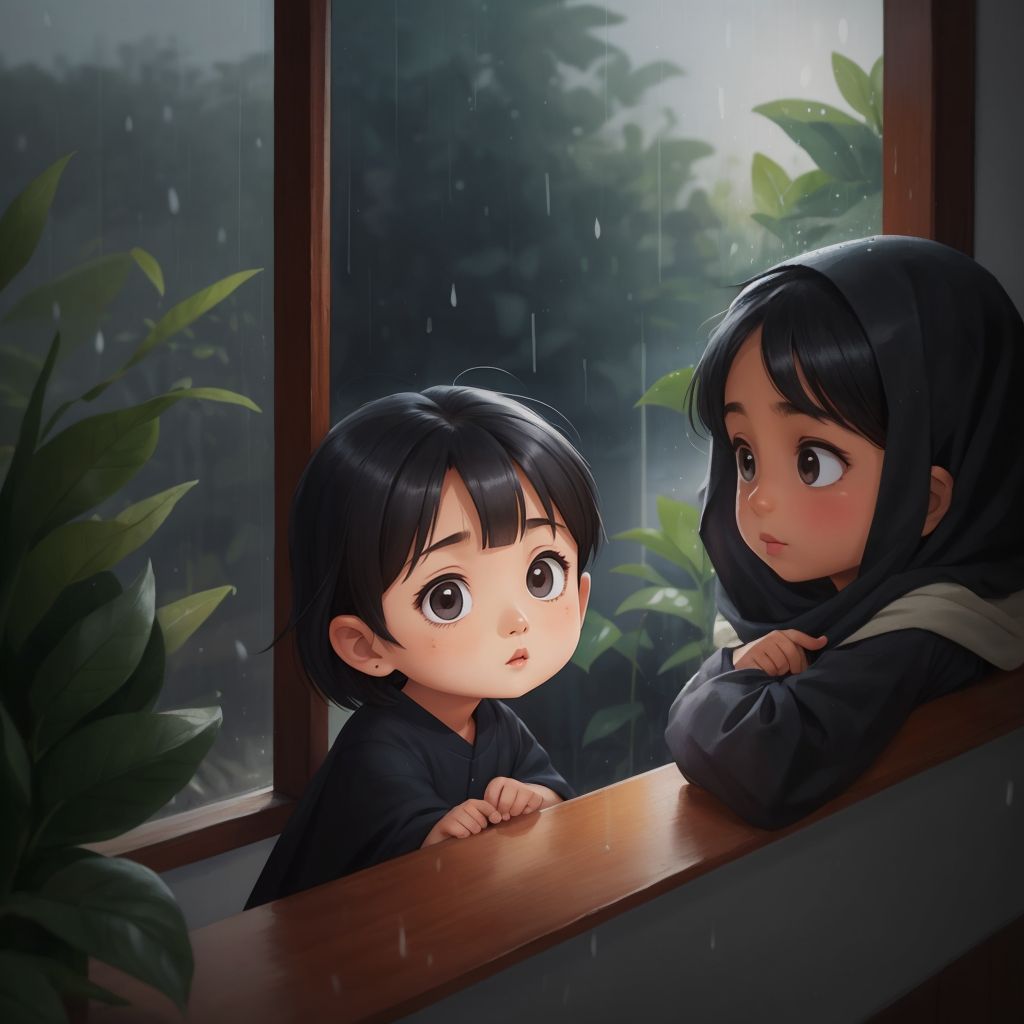
A day of rainy day where Maryam can't play outside

Two little girl exploring the Zoo
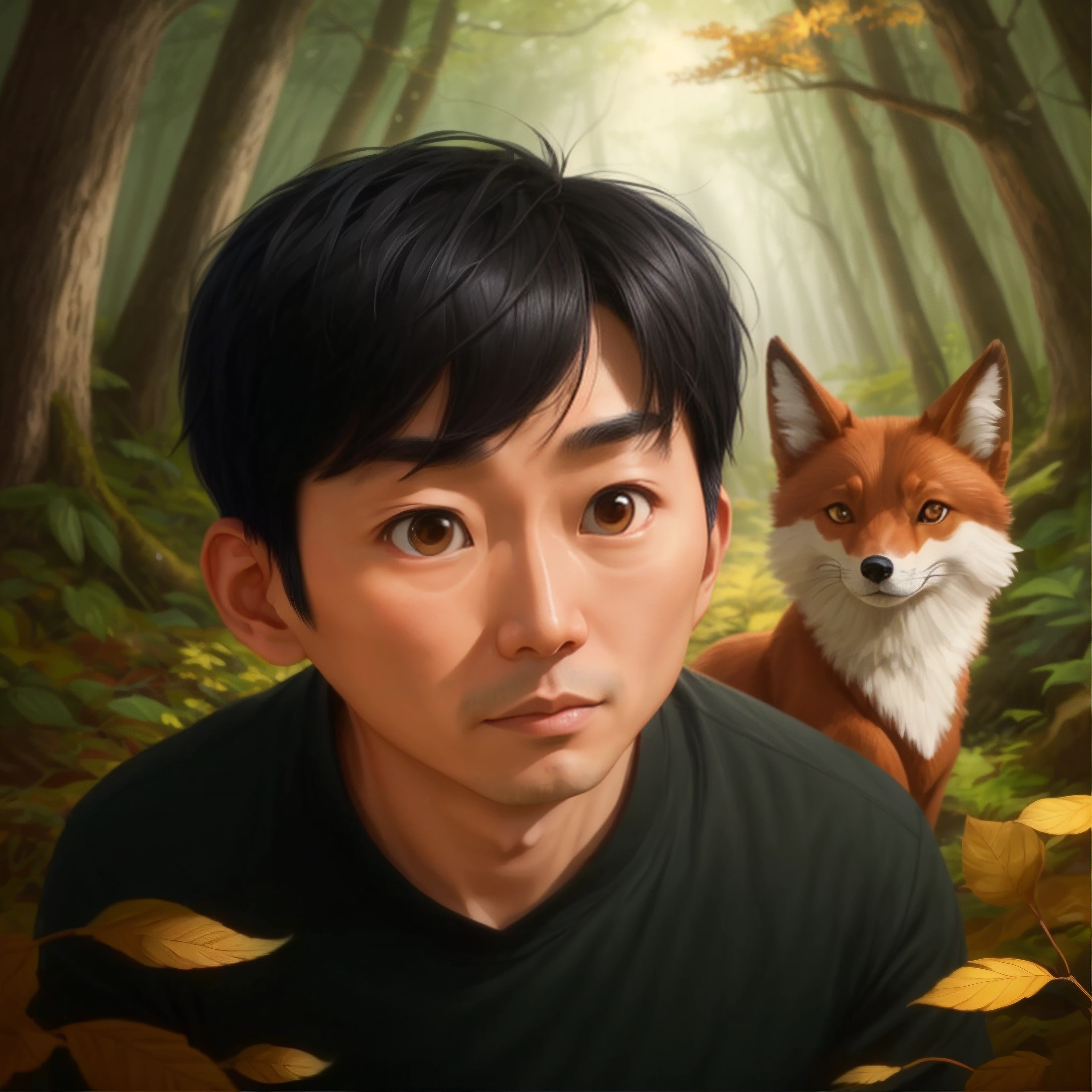
A prince adventure with a magical fox
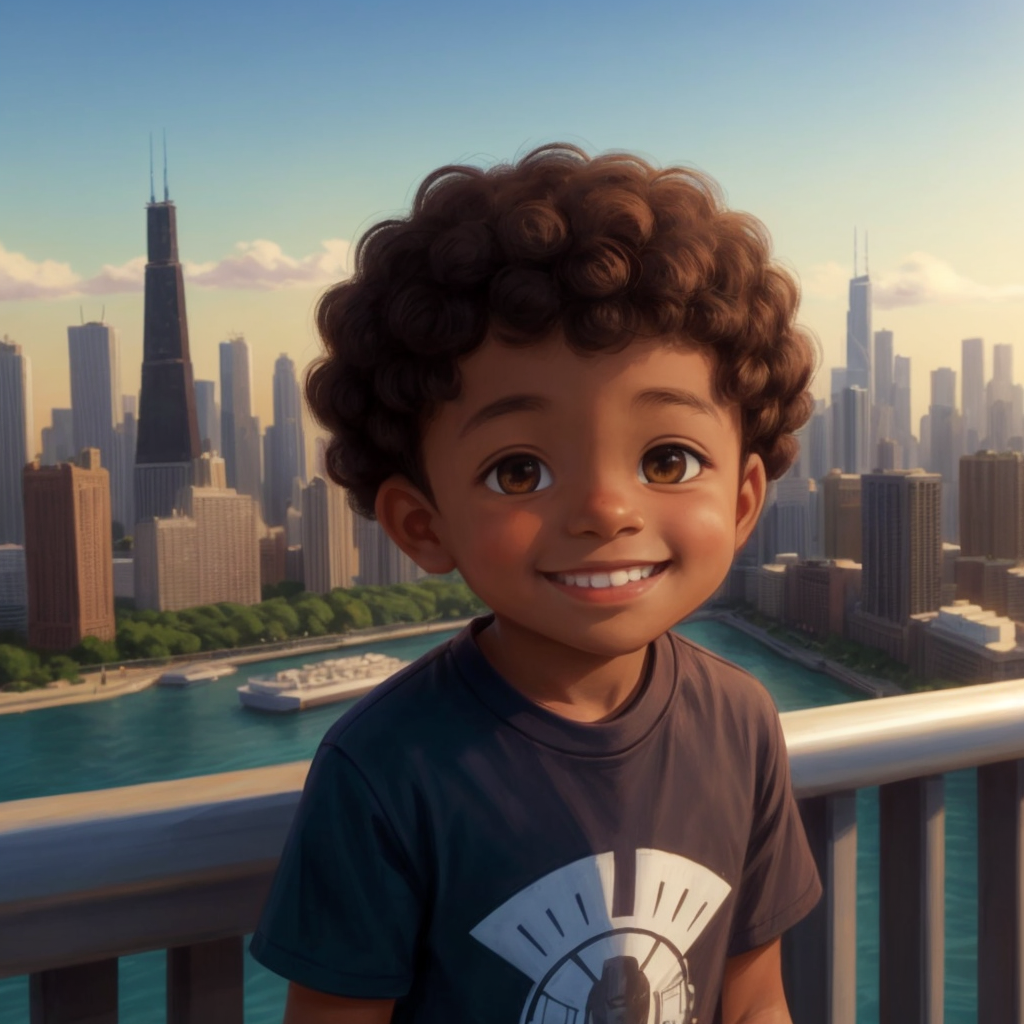
In Chicago lived a pretty brown boy with golden curls and a natural crown. His laughter filled every space until unkind words took flight. They called him "nappy head" and "dirty boy," but he found strength in his great grandma's journal. The pages held affirmations woven like threads with love's embrace. "People may call names, but you're more than they see," she wrote. So, Princeton stood tall, his heart a melody of courage. Joy flowed like rain as he danced through the hallways. "Their words won't define me, I'm fierce and unafraid," he whispered, for he's a beautifully crafted masterpiece.
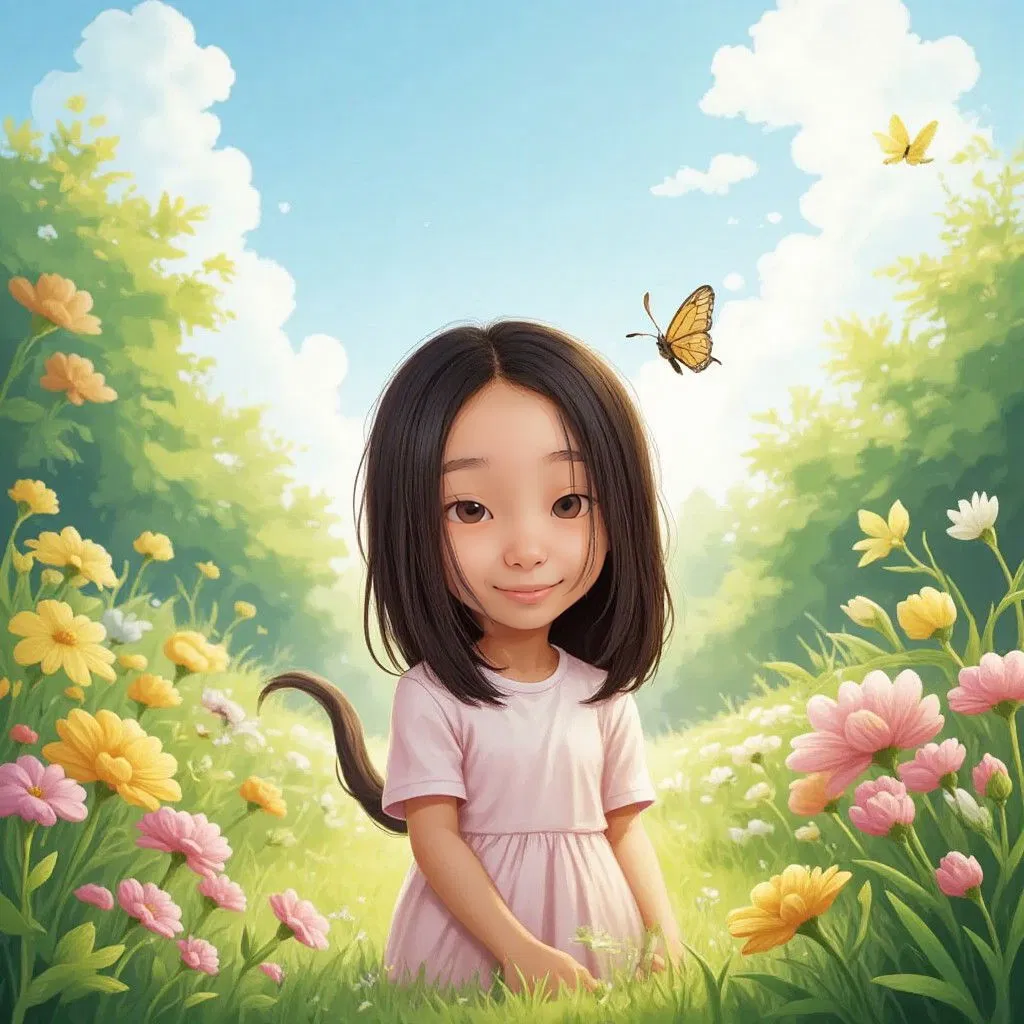
1. The Birth of a Tail (Start) Start with a short, meaningless tail at first. The tail symbolizes "anxiety in me," setting it to begin with a little childhood fear or anxious feelings. The short tail gradually turns into something that bothers me. Example: "At first the tail was small and cute. No one cared, and I thought so. But over time the tail turned long, heavy and sharp, eating the fear and anxiety inside me." 2. the growth of anxiety (in the middle) As the tail eats through my experiences and trauma(eg not being able to meet my parents expectations or my parents fighting and almost devours, mom gaslighting me), it gets longer more complicated. Tails cover me or follow me and bully me. There are disturbing figures sprouting from the tail, or the tail tying me up. Example: "The tail remembered all the hurt and trauma I went through. The bullying at school, the fear of failure, and the moments when I couldn't accept myself. All these memories made the tail heavy and long." 3. a confrontation with the tail (the climax) The moment I realize that the tail is part of me. I want to take the tail off, but it's already completely stuck as part of my body. The more I try to get rid of the tail, the stronger it reacts and harasses me. Example: "I tried to pull the tail off. But it was my flesh and bone. I couldn't pull it off, but rather the tail tightened me even more. The more I fought to get rid of the tail, the more and more I was tied to it. Endless Anxiety: A tragic ending with a tail growing endlessly and completely covering me. Example: "I eventually decided to talk to the tail face to face. 'You are a part of me. But I can control you.' At that moment the tail stopped little by little, and became lighter." Or: "The tail grew endlessly. My memory, anxiety, pain couldn't stop the tail. And I ended up being swallowed by the tail."
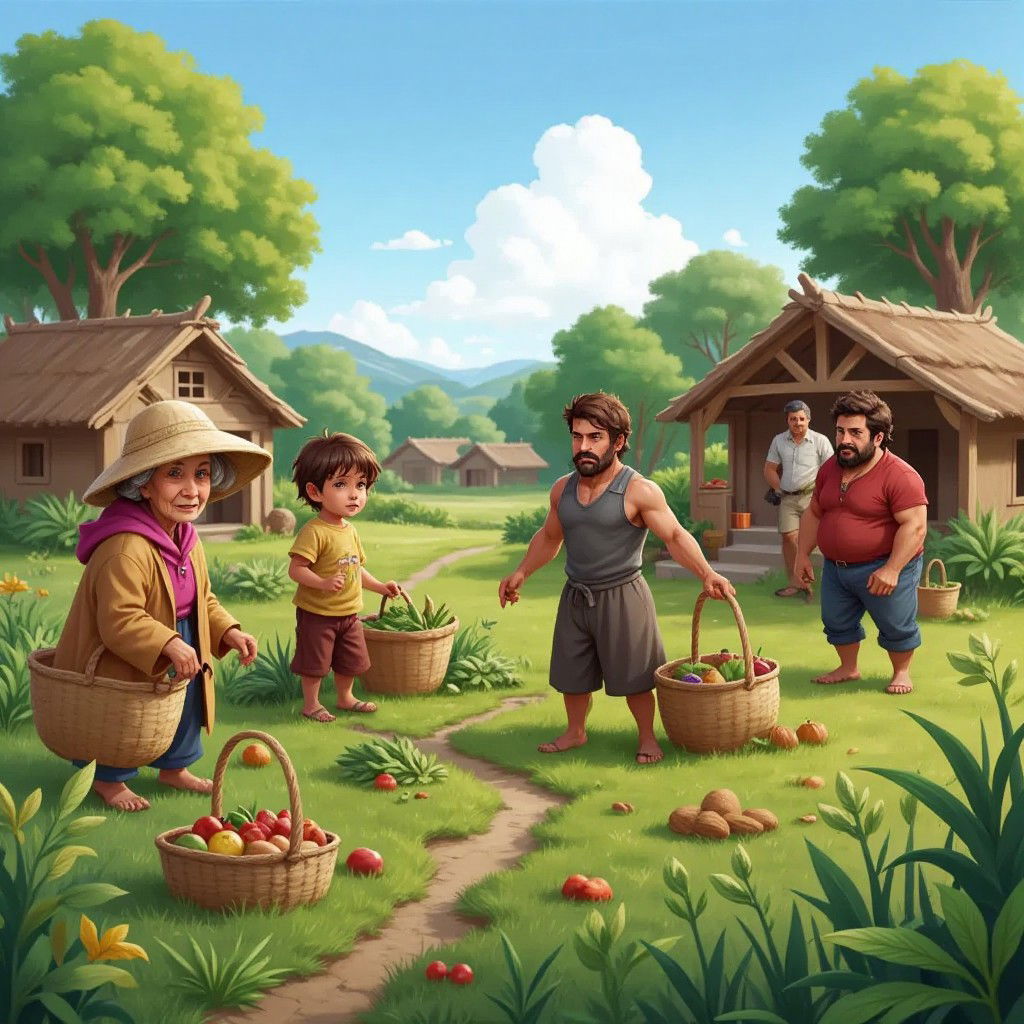
Há muito, muito tempo, antes de existirem escolas, livros e até mesmo cadernos, as pessoas viviam em aldeias e trabalhavam juntas para conseguir comida, construir casas e preparar festas. Mas havia um grande problema… os números ainda não existiam! Certo dia, a aldeia estava se preparando para uma grande festa. Eles precisavam dividir os alimentos entre as famílias, separar os bancos para as pessoas sentarem e organizar as frutas para a sobremesa. Mas como fazer isso sem contar? O chefe da aldeia olhou para todos e disse: — Precisamos de ajuda! Como podemos garantir que cada família receba a mesma quantidade de pão e peixe? Como podemos saber se todos terão um lugar para sentar? Os moradores começaram a tentar resolver a situação: Alguns tentaram comparar os alimentos colocando um monte ao lado do outro. Outros tentaram distribuir usando as mãos, mas sem saber se estavam dando mais ou menos para cada um. Alguns começaram a usar pedras para representar o que estavam distribuindo. Mesmo assim, tudo parecia confuso. Como eles poderiam se organizar melhor? Desafio para a turma: Agora, seus alunos fazem parte da aldeia! Em grupos, eles precisam pensar em soluções para os problemas sem usar números. Dê a cada grupo um desafio, como: Como dividir os peixes entre as famílias de forma justa? Como garantir que cada pessoa tenha um lugar para sentar na festa? Como lembrar quantos dias faltam para a festa sem um calendário? Depois, cada grupo compartilha sua solução. No final, você pode conduzir a reflexão: Como a invenção dos números ajudou as pessoas a resolver esses problemas?
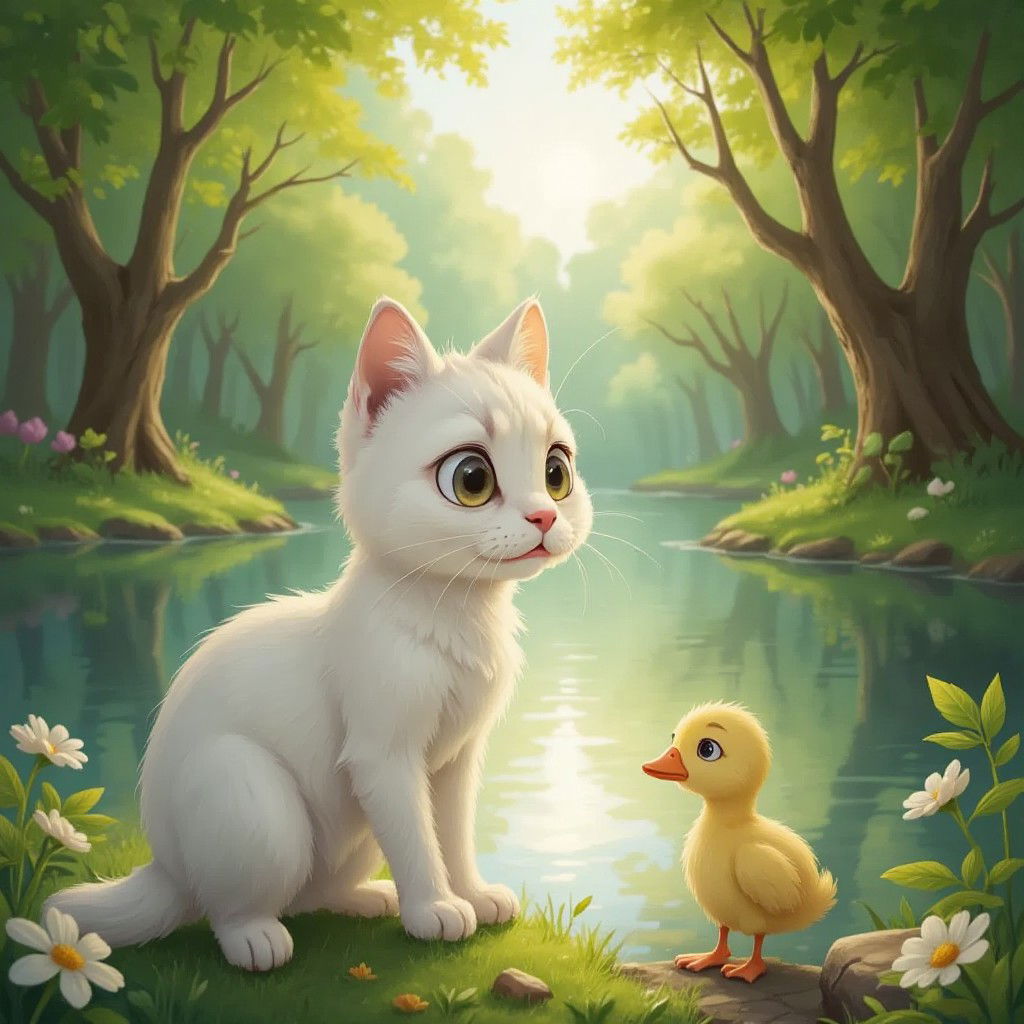
Synopsis In a peaceful forest, a curious white cat named Mimi discovers a crying duckling, Didi, who is lost. With the help of a friendly frog, Lulu, they embark on a mission to reunite Didi with his family. After a joyful search, they successfully find Didi's mother and siblings, celebrating the power of friendship and teamwork. Scene 1 One day, Mimi, a white cat who love adventure, was walking alone in the forest. Then she heard crying sound. The cryoo sound is came from the lake. Curious, Mimi approached the lake. Ant it turned out, the crying sound came from a duckling. Scene 2 Mimi asked the little duck, "Why are you crying?" But the little duck just stayed silent. Suddenly, a frog jumped out from behind the bushes. The frog said to Mimi, "Oh, he is lost from his mother and siblings." Scene 3 "That is sad," said Mimi. "What is your name?" While crying, the little duck said, "My name is Didi." "Okay, Didi. I will help you find your mother and siblings." Mimi tried to pull Didi from the grass with her mouth. Didi obeyed and did not resist. But, Didi still did not stop crying. Scene4 "I will help you too," said the frog. "By the way, my name is Lulu." "Okay, Lulu," said Mimi. Lulu was very helpful. With his Loud voice, he tried to call Didn't mother. Meanwhile, Mimi patiently carried Didi in her mouth. Scene 5 The other frogs in the lake heard Lulu's voice. And they all joined in. In an instant, the quiet lame was noisy with sound of frogs. They all wanted Didi to find his mother quickly. Scene 6 After walking and calling for a while, a grown duck finally appeared with five ducklings. Didi immediately jumped out of Mimi's mouth. It turned out, it was Didi's mother and his siblings. Scene 7 Didi was very grateful to Mimi and Lulu. And also grateful to all the frogs in the lake. Mimi was very happy to be able to help Didi. That white cat jumped around with joy. Meanwhile, Lulu and the frogs in the lake sang happy songs.
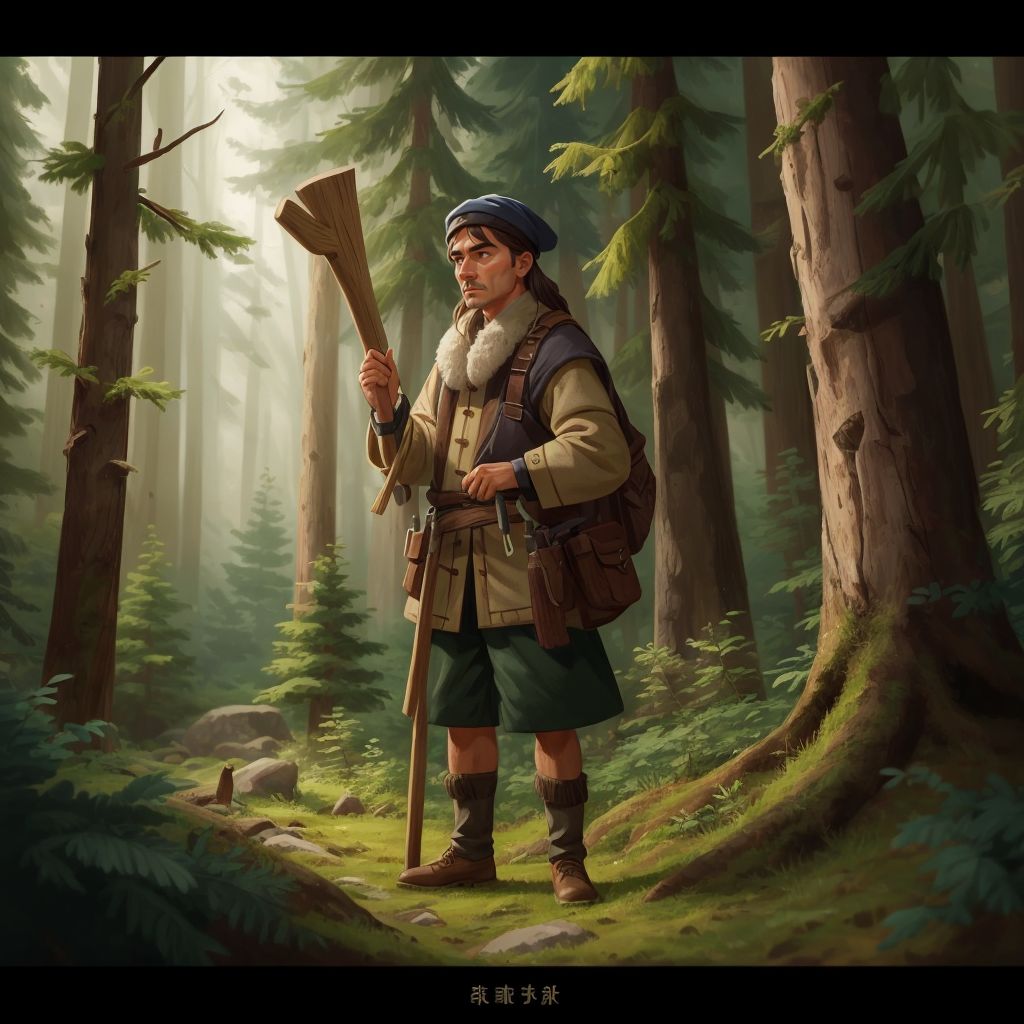
1, Ötzi carried a 1.82 m-long stave made from yew, 2, flint knife with handle made of anter 3, Longbow made of Yew, arrows made of dog wood and quiver made of roe deer fur, which was reinforced with a 92 cm long hazel stick. 4, Ötzi’s 13 cm dagger has a flint blade and an ash wood handle. The blade was forced into the wooden handle and bound with animal sinew.
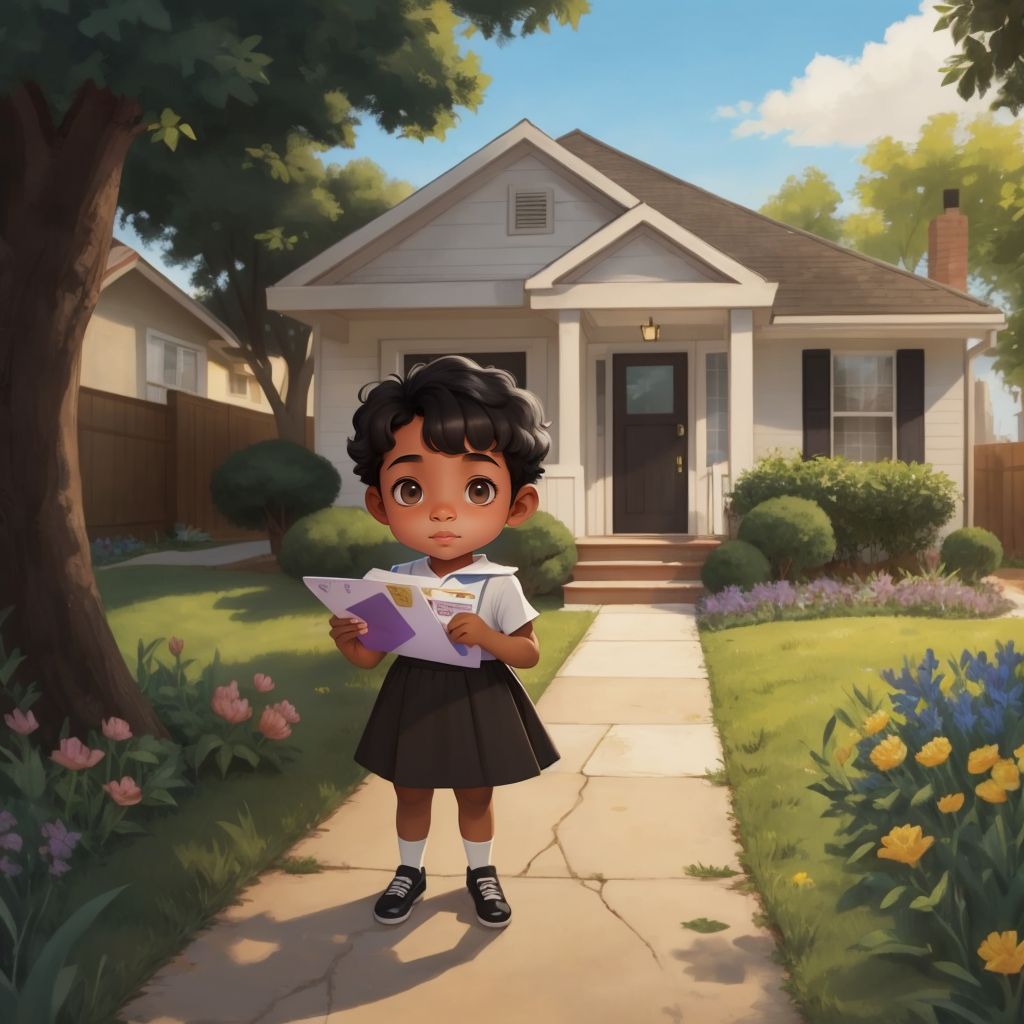
8 year old biracial girls finds a magical letter in her mailbox one sunny day. It was addressed to " Natalya Knowledge-seeker."
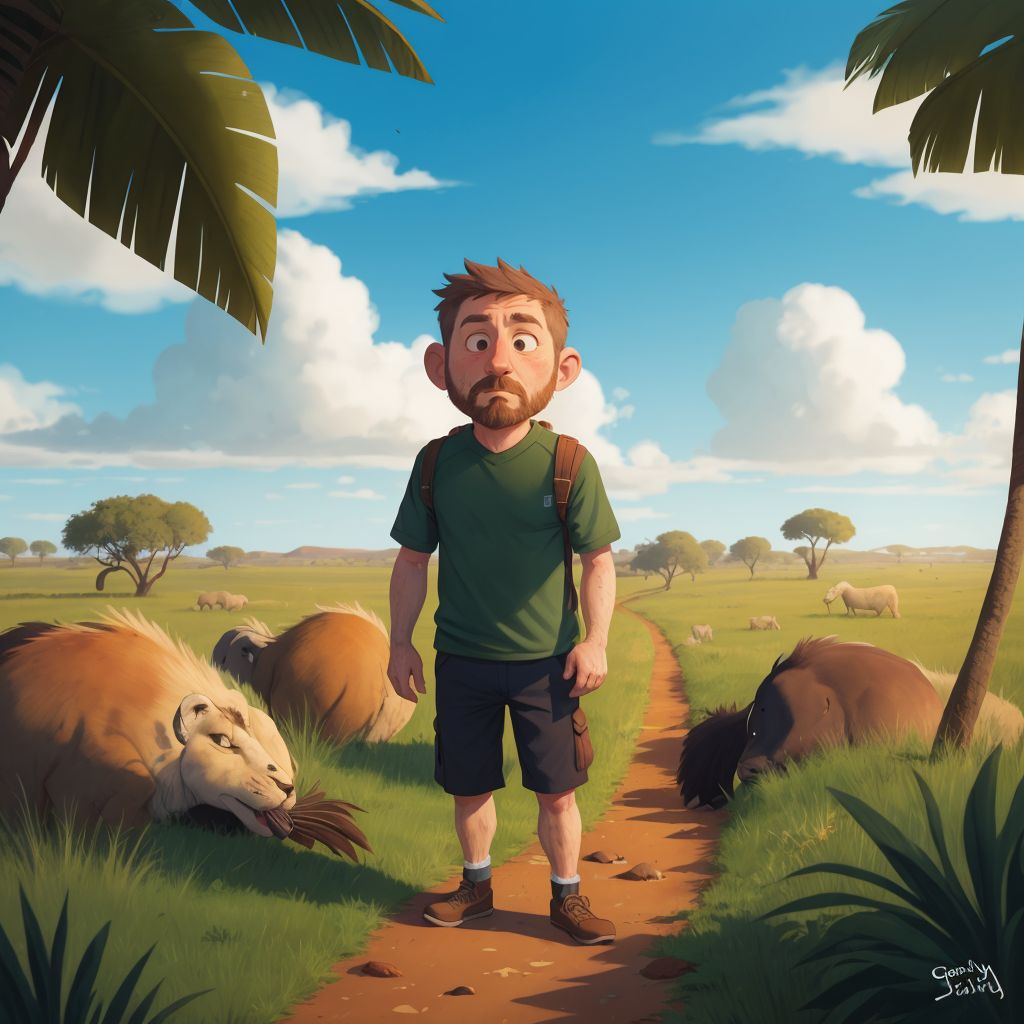
sad giraffe

In the bustling town of Progville, four best friends—Rick, Matt, Marvin, and Lauren—embark on an exciting journey to learn basic programming using everyday toys, with the help of their parents. Rick's Robotic Car: Rick learns to program his toy car to move using simple commands like forward, left, and right. With his dad's guidance, Rick successfully makes his car follow a path, sparking his enthusiasm for coding. Matt's Talking Teddy: Matt discovers how to make his teddy bear talk by using programming blocks. His mom shows him how to create phrases and time delays, allowing Matt to bring his teddy to life with personalized messages. Marvin's Light Show: Marvin learns to control the lights on his toy traffic light. With his dad’s help, he programs the lights to change colors in a specific sequence, creating an impressive light show. Lauren's Musical Keyboard: Lauren programs her toy keyboard to play songs. Guided by her mom, she types in the notes for “Twinkle, Twinkle, Little Star,” and successfully makes her keyboard play the tune. The Big Project: The friends combine their skills to build a multi-functional robot. Each friend contributes: Rick programs movement, Matt adds speech, Marvin integrates lights, and Lauren includes music. They create a robot that can move, talk, show lights, and play music, showcasing their teamwork and newfound programming abilities.